Yesterday was one of the most exhilarating and profoundy depressing days of my life. I spent the day in Haifa--my beloved hometown where I spent the best years of my life as a young reporter 1976-79, and the city yesterday was achingly beautiful from the vista of Yefe Nof Street--I had forgotten just how beautiful is, but it was almost dead. Hardly any traffic, the port was empty.
A visitor does not see physical destruction, until they take you to a few of the houses that were blown up. I accompanied a group of Hadssah women from the U.S., first to Rambam hospital and then on a tour of the city--which was cut short by air raid sirens again and again. The first siren came when we were inside the hosital, but they insisted that we go inside the conference room where we had been scheduled to go anyway, but a little later, because it is the most secure spot in the hospital. We spoke to several soldiers who had been gravely wounded in Lebanon whose lives were saved by the wonderful; doctors there.
It turned out a rocket had landed a kilomter away friom us, but it didnt explode. Then we began a tour of the nearby Bat Galim neighborhood which was abruptly cut short by another siren and we rushed into the shelter of a nearby rundown apartment building. The shelter was tiny with maybe 30 people crammed shoulder to shoulder in a small space--verry hot and smeeled bad.
Residents of the house were sobbing--a young single mother cradled her 2 year old and said, "I cant take this any more...its been going on for weeks and my nerves are snapping." I asked her why she didnt evacuate to Tel Aviv or somewhere else safe and she replied, "I already went there, but I couldnt impose on people any more, so i came back. I have no money now and nowhere to go". Her car was destroyed in a boming attack. Her mother wailed, "What is goping to happen to us...Please help us."
After we left there we went into another shelter in a parking lot underneath a kenyon (mall) where a mixed group of Jewish and Arab kids were being entertained by musicians beating drums. One Arab counselor shouted, "The jews and Arabs of Haifa stand together. We wont let Nasrallah tear us apart." By the way, everyone I spoke to--mostly non-Russians had learned from Russian-Israelis via the media the meaning of "Nasral" pa Russki and had a good laugh from it. Calling him "shit"is one of the few bright spots of the "matzav" (situation) here.
I saw young Israeli girl soldiers working with the Arab and Jewish kids, helping them to laugh and sing and those girls were so wonderful that at that moment I vowed to myself somethign I havent vowed in 25 years--that I intend to come back and live the remainder of my life in Haifa, where I can make a contribution for the sake of my own people, the Jews, and also for the Arabs and for the peace of the sacred Land we both love and cant manage to share.
I kept breaking into tears throughout the day, but felt uplifted and hopeful. Then on the long bus ride to Jerusalem, my spirits flagged and I felt a sense of hopelessness as i heard of the decision of the cabinet to go on to the Litani--nothing but death and destruction as far as the eye can see. My friends, understand me, I devoutly hope it works. The Israelis have convinced themselves that is the only way and I pray with every fiber of my being that Olmert and company are right and I am wrong. But hevreh, it is so FUCKING painful here, you have no idea. I love Haifa and the people of Israel so much and their world is failling apart. If you are up there, Hashem, get your ass in motion and save the people of Israel, save the world and stop this killing now.
Thursday, August 10, 2006
Walter posts from Haifa
Walter has been posting updates from Israel at his Ruby Jewsday site. However, his latest report (which he also emailed) is not yet posted at RJD so I'll put it up here:

Tuesday, August 08, 2006
Flickr photoset for Lani's bat mitzvah
Walter sent email from Israel requesting current family photos for Dalit and Tal. Here is a quick selection from Lani's bat mitzvah last fall. I will try to put up more photos later.
Sunday, August 06, 2006
Translation update
Rather than sending Walter the hi-res files, I decided I should finally get translations done for the two German documents--Hermann's birth certificate and a 1925 death certificate for an unknown Ringel--that were not previously translated. The birth certificate is heavily annotated with additional information from 1888, three years after the certificate was originally issued. The names of the mother and possibly the father are indicated but are difficult to decipher in the handwritten German script.
I googled for German translation services and found one that handles small personal jobs as well as corporate and legal work. I emailed them yesterday and heard back right away from someone asking for more details on the project. I sent off low-res copies of the documents and am waiting to hear more from them.
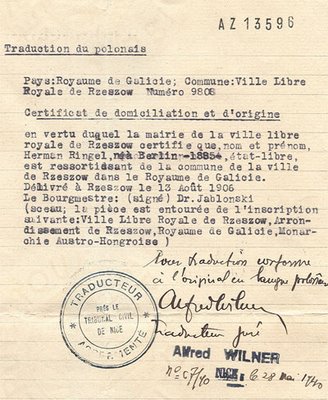
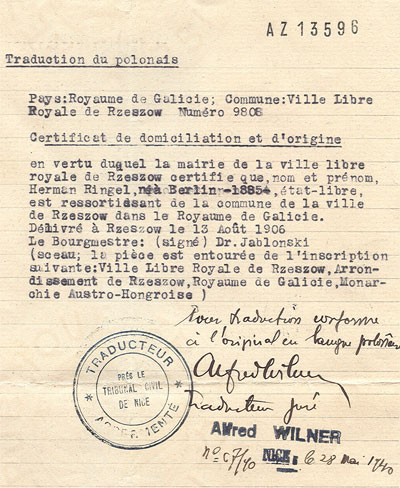
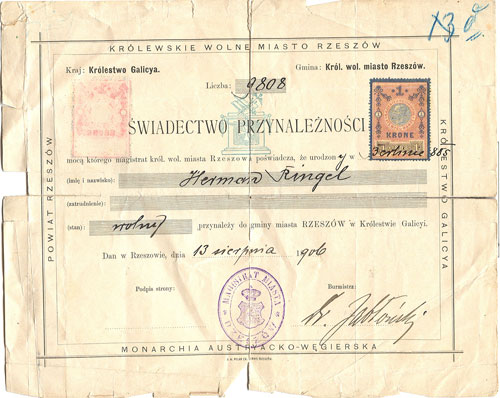
There is one other document for which we need an English translation, Hermann Ringel's 1906 Polish language "domicile of origin" certificate. My German translators don't do Polish, but it doesn't matter because we already have French translation of the document, done perhaps in 1940 in Nice. I will reproduce a closeup of that document (below) that may be legible even in the blog.
But first, here's a theory. Elly carried the Polish domicile record and presented it in France to support her claim of Polish citizenship and use of a Polish passport. Closer inspection of the passport seems to indicate that it was issued in Toulouse in France on July 5, 1940 and would expire after one year. So this suggests that Elly used Hermann's domicile record as documentation to acquire the passport from a Polish consulate in France.
Anyway, the French translation follows. If anyone can render that into English, it would be most helpful.
I googled for German translation services and found one that handles small personal jobs as well as corporate and legal work. I emailed them yesterday and heard back right away from someone asking for more details on the project. I sent off low-res copies of the documents and am waiting to hear more from them.
There is one other document for which we need an English translation, Hermann Ringel's 1906 Polish language "domicile of origin" certificate. My German translators don't do Polish, but it doesn't matter because we already have French translation of the document, done perhaps in 1940 in Nice. I will reproduce a closeup of that document (below) that may be legible even in the blog.
But first, here's a theory. Elly carried the Polish domicile record and presented it in France to support her claim of Polish citizenship and use of a Polish passport. Closer inspection of the passport seems to indicate that it was issued in Toulouse in France on July 5, 1940 and would expire after one year. So this suggests that Elly used Hermann's domicile record as documentation to acquire the passport from a Polish consulate in France.
Anyway, the French translation follows. If anyone can render that into English, it would be most helpful.
On the Kurfürstendamm

I had trouble with the display of this photo in the post below and decided it deserved a post of its own: Hermann and Helga on the Kurfürstendamm in about 1934.

Saturday, August 05, 2006
Hermann Ringel documents
Doh. He was born in Berlin in November 1885. Then the family returned to Galicia, and then he came back in 1906? There are still some mysteries here to unravel. For one, we have not yet had anyone translate the birth certificate, and especially the handwritten annotations.
Here are Hermann's birth certificate and relocation document. I've made them as large as possible in the blog, so I'm sorry they are not very legible. Hopefully I will also be able to get higher resolution versions to Walter.

The Ringel dossier
I just spoke to Walter, who departs tomorrow for his trip to Israel and Ukraine. The family gathering day is supposed to be Tuesday, though he is unsure if the latest round of bombings got close to Dalit and Tal's town of Zichron Yachov. I can't wait to get Walter's report on the reunion. Don't forget to take lots of pictures.
To prepare for the meeting, I need to supply Walter with copies of the Hermann Ringel birth certificate and relocation permit, as well as various photos for him to share with the Israeli relatives. The problem is that the documents are really big files--what's the best way to get full-resolution images to him over the wire?
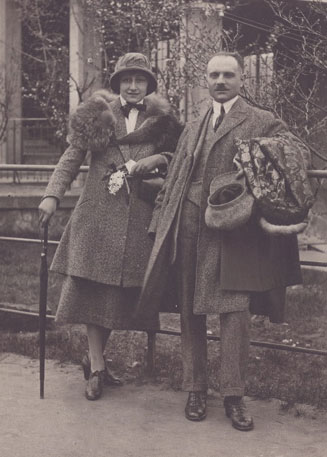
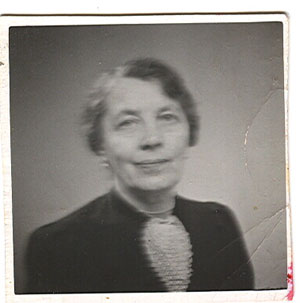
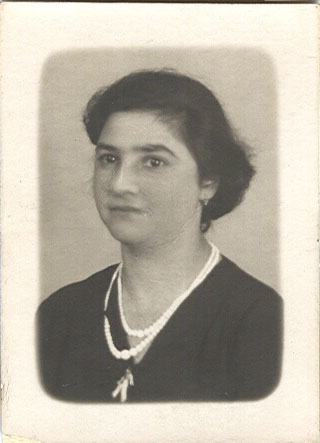
While I mull that over, I'll go ahead and post the pictures that I want to share. Here we have: Hermann Ringel, Herman and wife Elly, Hermann and daughter Helga, Elly's mother Bette Katz (we think), and an unknown Ringel woman (possibly Rosa, Bette or Margot). Only Ze'ev will know any of the people in the pictures, and it sounds as though it is doubtful Walter will be able to see Ze'ev, since he is not well enough to travel from the kibbutz, which is within the war zone.
Friday, August 04, 2006
Family Finder search results are promising
I mentioned that JewishGen Family Finder success story in my last post. Well, I figured, we might as well give it a try. The JGFF database lets you query on surnames, towns and countries to discover other people who are researching those sames names and places. I guess it has been running quite a while and has a large number of researchers indexed.
I ran queries on Tulbowitz in Rostov, Rabinovich in Kaunus, Ringel in Rzeszow, and Wolgemuth in Kaliningrad. Three of the four rang up good hits--only the Tulbowitzes came up blank. There are lots of hits for Rabinovich and Ringel, both fairly common names in their regions of Lithuania and Galicia. We will certainly want to follow up with some of those researchers.
The Wolgemuth hits were more specific--two researchers interested in Wolgemuths in Kaliningrad, the modern name for Konigsberg, then the capital of German East Prussia, where our grandmother Elly was born 1900, Both records are old. Bernice Siegel of Brighton MA last updated her record in 1999. Gary Smith, who does not list an address, updated last in 2001.
I sent each of them an email tonight introducing myself as a descendent of the Julius Wolgemuth-Bette Katz family who had two daughters born in Konigsberg in the early years of the last century. We'll cross our fingers and hope that either or both of the emails finds their destination. If so, it may be that we will find someone who can tell us more about our great-grandfather Julius.
I ran queries on Tulbowitz in Rostov, Rabinovich in Kaunus, Ringel in Rzeszow, and Wolgemuth in Kaliningrad. Three of the four rang up good hits--only the Tulbowitzes came up blank. There are lots of hits for Rabinovich and Ringel, both fairly common names in their regions of Lithuania and Galicia. We will certainly want to follow up with some of those researchers.
The Wolgemuth hits were more specific--two researchers interested in Wolgemuths in Kaliningrad, the modern name for Konigsberg, then the capital of German East Prussia, where our grandmother Elly was born 1900, Both records are old. Bernice Siegel of Brighton MA last updated her record in 1999. Gary Smith, who does not list an address, updated last in 2001.
I sent each of them an email tonight introducing myself as a descendent of the Julius Wolgemuth-Bette Katz family who had two daughters born in Konigsberg in the early years of the last century. We'll cross our fingers and hope that either or both of the emails finds their destination. If so, it may be that we will find someone who can tell us more about our great-grandfather Julius.
Genealogy blog
I came across a good collection of articles and resources at the Jewish section of Genealogy Blog. I may post a few that are relevant to our search.
For example, here is a detailed report about a genealogy success story, in which long lost branches of a Jewish family in Maryland, Uruguay, and the Netherlands are reunited through the Jewish Genealogy Family Finder. So far I have not entered myself in the JGFF, but this article is strong incentive to do so.
For example, here is a detailed report about a genealogy success story, in which long lost branches of a Jewish family in Maryland, Uruguay, and the Netherlands are reunited through the Jewish Genealogy Family Finder. So far I have not entered myself in the JGFF, but this article is strong incentive to do so.
Thursday, August 03, 2006
Seven cousins
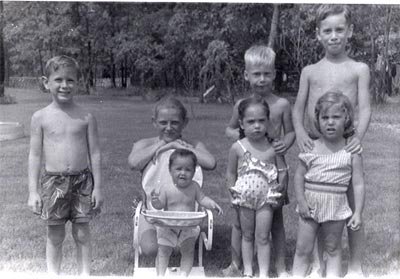
Here's another great photo from the Sandy collection, or else it is Marsha's. The photo print this was scanned from says October 1957. That's Walter, Danny, and Joanne on the right, Robert Felenstein at left, Marsha Felenstein kneeling, and I am guessing Janis and Leslie Brenner up front.
Four generations

Now that the focus is back to Albany, how about this great photo from the Sandy Brenner collection? Here we have a photo from 1941 with matriarch Rose Ratner (seated), her daughter Selma (right), Selma's daughter Joan (left), and Joan's daughter Wendy (on Rose's lap).
Albany 1915 census
Here is one interesting lead, a Sofie and Morris Tulbowitz in Albany Ward 3 in a special NY State census in 1915. I can imagine that Sofey might be Sophia, but Morris doesn't sound right for Solomon.
Albany, New York State Census, 1915 Record
Census
Name:
Morris TULBOWITZ
Albany, New York State Census, 1915 Record
Census
Name:
Sofey TULBOWITZ
Whether or not they are related, the 1915 census is worth looking into deeper. Here is info about the census database.
Description:
Although not the largest city in the state, Albany, New York is one of the most important urban areas along the Hudson River. This database is a collection of state census records from the city in 1915. It includes information regarding residents of the city's first eight wards. Researchers will find the resident's name, election district number, and ward number. Page and line numbers are provided to aid those wishing to find the original state document housed at the capital. This update adds nearly 65,400 names, making a total of 108,000 names now available. For those Ancestry.com patrons seeking ancestors from Albany, New York, this can be a useful collection of records.
Source Information:
Lommel, Brenda, ed.. Albany, New York State Census, 1915 [database on-line]. Provo, UT, USA: MyFamily.com, Inc., 1999. Original data: State of New York. State Census of 1915. Albany, NY, USA: New York State Government, 1915.
Albany, New York State Census, 1915 Record
Census
Name:
Morris TULBOWITZ
Albany, New York State Census, 1915 Record
Census
Name:
Sofey TULBOWITZ
Whether or not they are related, the 1915 census is worth looking into deeper. Here is info about the census database.
Description:
Although not the largest city in the state, Albany, New York is one of the most important urban areas along the Hudson River. This database is a collection of state census records from the city in 1915. It includes information regarding residents of the city's first eight wards. Researchers will find the resident's name, election district number, and ward number. Page and line numbers are provided to aid those wishing to find the original state document housed at the capital. This update adds nearly 65,400 names, making a total of 108,000 names now available. For those Ancestry.com patrons seeking ancestors from Albany, New York, this can be a useful collection of records.
Source Information:
Lommel, Brenda, ed.. Albany, New York State Census, 1915 [database on-line]. Provo, UT, USA: MyFamily.com, Inc., 1999. Original data: State of New York. State Census of 1915. Albany, NY, USA: New York State Government, 1915.
Tulbowitz search
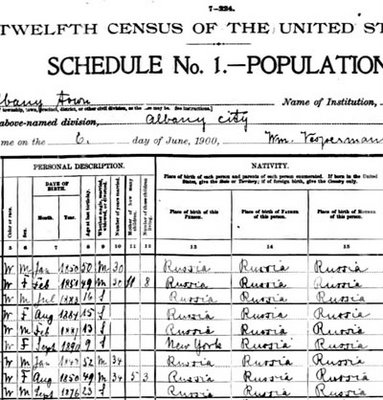
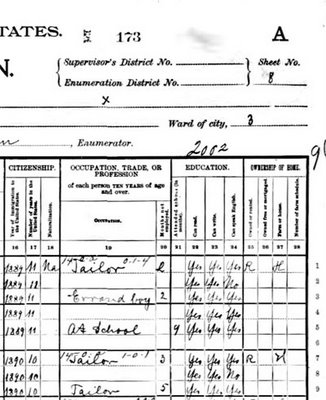
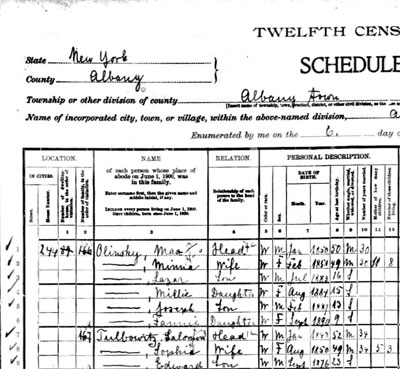
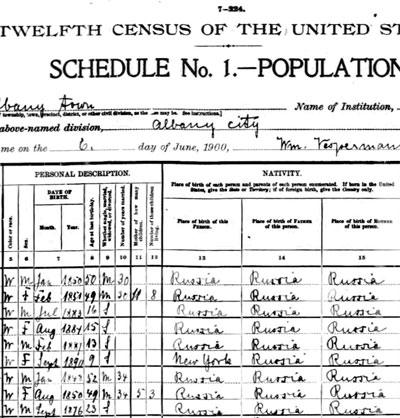
So far, I have not found more than the 1900 census document Walter discovered. Here it is blown up and divided into three panels left to right. The Tulbowitzes (Solomon, Sophia and Edward) are the bottom three rows in each image.


Family resemblance
By the way, I think Rabbi Spektor looks a hell of a lot like Stan, especially in the photo on the right.
Meet Solomon and Sophia Tulbowitz--our great-great grandparents
Big News! I got a call from Beth Abraham Jacob congregation in Albany today advising me that there are two Tulbowitz (finally the correct spelling) graves in their cemetery on Fuller Street, where Dan and I made a brief stop last month, and they belong to Solomon and Sophie Tulbowitz, who are clearly the parents of Rose Ratner and our great-great grandparents. The lady from the synagogue also told me exactly where in the cemetery to find the graves and I will make a trip up to Albany to photograph them after returning from my overseas trip. I went now to Ancestry.com, typed in Sophie Tulbowitz and was directed to the 1900 census. Here is what I found: a three member household at 244 Pearl Street in Albany occupied by Solomon born in 1848, his wife Sophia, born in 1850 and son Edward, born in 1876, making him Rose's younger brother (by two years). The census had the year that they arrived as 1890, which seems correct for Sophie, who came with her daughter and son-in-law Rose and Abraham Ratner, but incorrect for Solomon and Edward, who were said to have come several years later. Solomon and Sophie were said to have had 5 children, of whom three were still alive in 1900. Both Solomon and Edward were identified as tailors by occupation. What we dont have so far, obviously, is the year of their deaths. I wasnt able to find death records for them on ancestry, but maybe Dan, who is already more of a maven at all of this, can also check to make sure I didnt miss them.
At the moment, I am thinking it would be probably be relatively easy to trace our family if we went to Rostov because the name 'Tulbowitz' is so unusual, and I'm feeling frustrated that I'll be so close to both Rostov and Kovno (Kaunus), Luthuania on this trip to Kiev and Crimea, but not able to go to either this time. Unfortunately, I cant change the date of my flight, without screwing up my freeby flight. In the meantime, though, I'll contact that geneology maven in Moscow to see if he'd be willing to do some checking for us without charge, and, if not, in the near future, I'll have to make another trip to Mother Russia (and Lithuania) to follow the Tulbowitz and Rabinowitz lines. Frankly, I dont need a lot of inducement to go to Russia, a place I love hanging out, just need to secure some funding for the trip. Dan, Jo, you're invited to come along when I go.
At the moment, I am thinking it would be probably be relatively easy to trace our family if we went to Rostov because the name 'Tulbowitz' is so unusual, and I'm feeling frustrated that I'll be so close to both Rostov and Kovno (Kaunus), Luthuania on this trip to Kiev and Crimea, but not able to go to either this time. Unfortunately, I cant change the date of my flight, without screwing up my freeby flight. In the meantime, though, I'll contact that geneology maven in Moscow to see if he'd be willing to do some checking for us without charge, and, if not, in the near future, I'll have to make another trip to Mother Russia (and Lithuania) to follow the Tulbowitz and Rabinowitz lines. Frankly, I dont need a lot of inducement to go to Russia, a place I love hanging out, just need to secure some funding for the trip. Dan, Jo, you're invited to come along when I go.
German Jews in WWI
The other day I posted information about the military draft in the U.S. for World War I. Our grandfather Walter Ruby registered in the draft, was called up, and fought and was seriously injured in the war. Our German grandfather, Hermann Ringel, also fought in the war on the other side.
I was curious about German Jewry and its response to the war, so I dipped into Amos Elon's "The Pity of It All--A Portrait of the German-Jewish Epoch, 1743-1933" for these excerpts:
"When war actually broke out, five weeks after the assassination, middle- and upper-middle-class urban Jews did not 'go home.' They joined up. By volunteering for war sevice long before being called up they hoped they would finally overcome the remaining informal impediments to full integration in German society....
The common experience of war was generally expected to cement firm new bonds among Germans of all faiths. The term used for that experience was Erlebnis. A young Jewish volunteer, Julius Holz, invoked his Erlebnis on December 7, 1914, his twentieth birthday, in a letter to his father from the front. He vowed to 'fight like a man, as a good German of true Jewish faith and for the greater honor of my family.' ...
In the main urban centers, liberal, leftist, and perhaps even some pacifist Jews were swayed by the prevailing emphasis on Russia. It was easier to endorse a war directed against the last despoitic and openly anti-Semitic regime in Europe....
In a speech he gave on August 4 affirming his government's decisio to go to war, the kaiser solemny assured his audience by proclaiming that differences of religion, political affiliation, class, and ethnic origin no longer counted. He said: 'I no long know any aprties, I know only Germans,' at which point the Reichstag broke into a 'storm of bravos.' ....
Jewish volunteers and conscripts felt very little hostility in the ranks. In the name of the kaiser's 'civic truce,' the military authorities ordered the more radical anti-Semitic periodicals to refrain from anti-Jewish agitation.
The Zionists were still a negligible minority among German Jews. At a conference just sight weeks before the war, they had reaffirmed their conviction that they were aliens in Germany. Once war was declared, though, they joined in with as much--and often more--enthusiasm than others, ready if necessary to shoot at French or Russian Zionists.
The Zionist Judische Rundschau, in its first issue after the outbrak of war, exhorted reader to volunteer unhesitatingly and en mass....
German Zionists already settled in Palestine hurried back to volunteer....
Large parts of the Pale of Settlement in Russia soon came under German military rule. Nearly everywhere, Russian Jews welcomed the German troops as liberators....
[Lots of great detail about Jewish pro-war sentiment, including from Freud and other intellectuals, followed by rising disillusionment as the war dragged on.]
Far from unitying Germans and Jews, the ware seemed only to deepen the gulf between them. As soon as the war turned sour, chauvinism turned inward....
Such feelings were exacerbated by the sudden influx of impoverished Jews from occupied Poland and Russia. Living in abject conditions on the edges of the larger cities, they elicited revulsion....
In October 1916, when almost three thousand Jews had already died on the battlefield and more than seven thousand had been decorated, War Minister Wild von Hohenborn saw fit to sanction the growing prejudices. He ordered a 'Jew census' in the army to determine the actual number of Jews on the front lines as opposed to those serving in the rear....
The Jew census had a devastating effect on German Jews, generating an unprecedented moral crisis among those on the front line....
In 1914, Eranst Simon had fully shared the 'intoxicating joy' of going to war. The Jew census was a 'betrayal:' the dream of community was gone. In one horrendous blow, the census reoped the deep chasm that 'could not be bridged by common language, work, civilizaton, and custom.' ....
Only two years earlier, Nahum Godmann had hailed the gloried of Prussian milarists and their wonder war. Now he wrote that Jews had nothing to do with this war: its origins, its aims, its content were totally alien to them. It was taking place outside their sphere.....
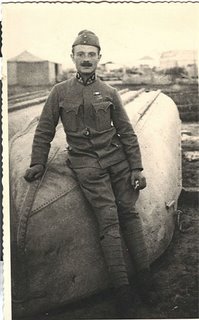
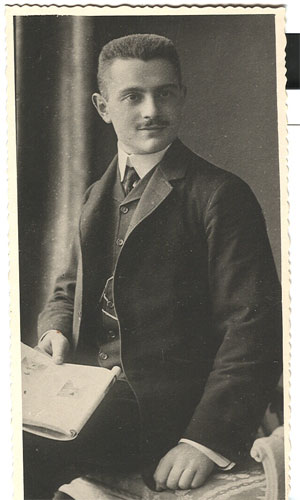
[I'll stop there. This book has lots of great content about Jewish life in Germany until it was obliterated by the Nazis. I'll return later with excerpts about the Zionist movement and also the Jewish reaction to the rise of Hitler. For now here is a photo of Hermann Ringel in uniform as a German soldier during WWI.]
I was curious about German Jewry and its response to the war, so I dipped into Amos Elon's "The Pity of It All--A Portrait of the German-Jewish Epoch, 1743-1933" for these excerpts:
"When war actually broke out, five weeks after the assassination, middle- and upper-middle-class urban Jews did not 'go home.' They joined up. By volunteering for war sevice long before being called up they hoped they would finally overcome the remaining informal impediments to full integration in German society....
The common experience of war was generally expected to cement firm new bonds among Germans of all faiths. The term used for that experience was Erlebnis. A young Jewish volunteer, Julius Holz, invoked his Erlebnis on December 7, 1914, his twentieth birthday, in a letter to his father from the front. He vowed to 'fight like a man, as a good German of true Jewish faith and for the greater honor of my family.' ...
In the main urban centers, liberal, leftist, and perhaps even some pacifist Jews were swayed by the prevailing emphasis on Russia. It was easier to endorse a war directed against the last despoitic and openly anti-Semitic regime in Europe....
In a speech he gave on August 4 affirming his government's decisio to go to war, the kaiser solemny assured his audience by proclaiming that differences of religion, political affiliation, class, and ethnic origin no longer counted. He said: 'I no long know any aprties, I know only Germans,' at which point the Reichstag broke into a 'storm of bravos.' ....
Jewish volunteers and conscripts felt very little hostility in the ranks. In the name of the kaiser's 'civic truce,' the military authorities ordered the more radical anti-Semitic periodicals to refrain from anti-Jewish agitation.
The Zionists were still a negligible minority among German Jews. At a conference just sight weeks before the war, they had reaffirmed their conviction that they were aliens in Germany. Once war was declared, though, they joined in with as much--and often more--enthusiasm than others, ready if necessary to shoot at French or Russian Zionists.
The Zionist Judische Rundschau, in its first issue after the outbrak of war, exhorted reader to volunteer unhesitatingly and en mass....
German Zionists already settled in Palestine hurried back to volunteer....
Large parts of the Pale of Settlement in Russia soon came under German military rule. Nearly everywhere, Russian Jews welcomed the German troops as liberators....
[Lots of great detail about Jewish pro-war sentiment, including from Freud and other intellectuals, followed by rising disillusionment as the war dragged on.]
Far from unitying Germans and Jews, the ware seemed only to deepen the gulf between them. As soon as the war turned sour, chauvinism turned inward....
Such feelings were exacerbated by the sudden influx of impoverished Jews from occupied Poland and Russia. Living in abject conditions on the edges of the larger cities, they elicited revulsion....
In October 1916, when almost three thousand Jews had already died on the battlefield and more than seven thousand had been decorated, War Minister Wild von Hohenborn saw fit to sanction the growing prejudices. He ordered a 'Jew census' in the army to determine the actual number of Jews on the front lines as opposed to those serving in the rear....
The Jew census had a devastating effect on German Jews, generating an unprecedented moral crisis among those on the front line....
In 1914, Eranst Simon had fully shared the 'intoxicating joy' of going to war. The Jew census was a 'betrayal:' the dream of community was gone. In one horrendous blow, the census reoped the deep chasm that 'could not be bridged by common language, work, civilizaton, and custom.' ....
Only two years earlier, Nahum Godmann had hailed the gloried of Prussian milarists and their wonder war. Now he wrote that Jews had nothing to do with this war: its origins, its aims, its content were totally alien to them. It was taking place outside their sphere.....

[I'll stop there. This book has lots of great content about Jewish life in Germany until it was obliterated by the Nazis. I'll return later with excerpts about the Zionist movement and also the Jewish reaction to the rise of Hitler. For now here is a photo of Hermann Ringel in uniform as a German soldier during WWI.]
Wednesday, August 02, 2006
HIAS documents
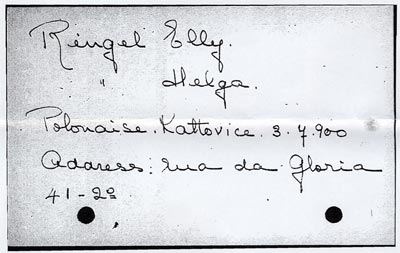
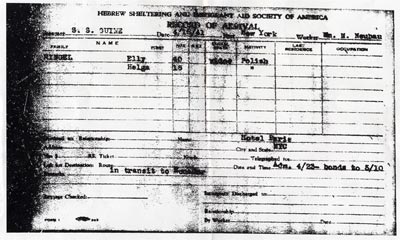
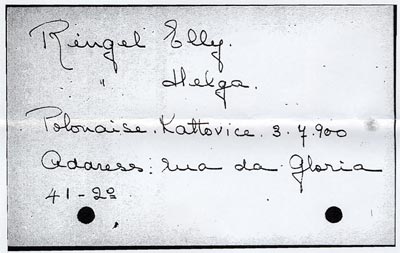
From Walter: here are the two scanned documents from HIAS. The first is the file filled out by the HIAS worker in NY and the lower is their address in Lisbon.



Rabbi Isaac Elchanan Spektor
Since Dan has started down the road of trying to understand our relationship with the Kovno Rav, lets start with this biographical entry from the Eilat Gordin Levitan archive.
He had four children; Son Benjamin Rabinowitz was murdred in 1906R. Zvi Hirsh Rabinowitz died in 1909 his two other children; a son died at age 40 and a daughter Rachel who died in 1876.
Notice no mention of the Gonif, who would have died around 1855.
Here's another page from the Kerenets section of the Levitan site that has a lot of stuff on vartious Spektors who fill the gap between 1880 or so and the Holocaust:
So how and why did some Spektors become Rabinoviches and how does all lof this relate to Joseph Rabinovich deciding to pull up roots and head to America in 1874, which seems very early. But hey, he must have been the smart Rabinovich/Spektor.
He had four children; Son Benjamin Rabinowitz was murdred in 1906R. Zvi Hirsh Rabinowitz died in 1909 his two other children; a son died at age 40 and a daughter Rachel who died in 1876.
Notice no mention of the Gonif, who would have died around 1855.
Here's another page from the Kerenets section of the Levitan site that has a lot of stuff on vartious Spektors who fill the gap between 1880 or so and the Holocaust:
So how and why did some Spektors become Rabinoviches and how does all lof this relate to Joseph Rabinovich deciding to pull up roots and head to America in 1874, which seems very early. But hey, he must have been the smart Rabinovich/Spektor.
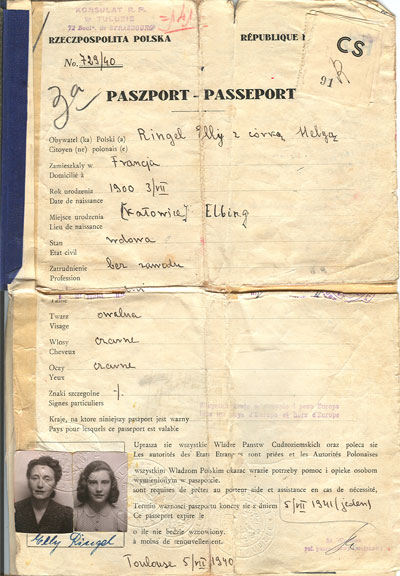
Elly's passport
A couple of days ago, Walter posted about HIAS and Helga and Elly's arrival in New York. He mentioned a scrap of paper with a birth date and birth place, and he surmised these would have been taken from Elly's false Polish passport.
We have that passport among our artifacts, and Walter is precisely correct about Katowice and the July 3, 1900 date--the place is fictitious but the date is accurate. Actually, there is a discrepancy regarding Elly's birth year in the two official death records that are accessible through Ancestry.com. The Social Security Death Record has her date of birth as July 3, 1900, but the State of California death record has it as July 3, 1901. We agree that 1900 is correct, right?
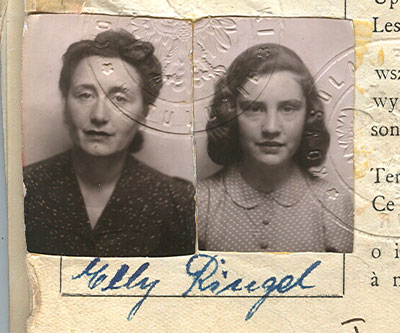
Here's an image from the passpost, followed by a closeup of the passport photos.


We have that passport among our artifacts, and Walter is precisely correct about Katowice and the July 3, 1900 date--the place is fictitious but the date is accurate. Actually, there is a discrepancy regarding Elly's birth year in the two official death records that are accessible through Ancestry.com. The Social Security Death Record has her date of birth as July 3, 1900, but the State of California death record has it as July 3, 1901. We agree that 1900 is correct, right?
Here's an image from the passpost, followed by a closeup of the passport photos.
Tuesday, August 01, 2006
Joanne checks in
This came by email this morning.
arrived totally exhausted. revived. out on the Seine last night. lots of talk about Lani coming to live here next year and schooling with international kids at an amazingly warm and wonderful small school two block from La Tour Eiffel. I keep saying if Lani doesn't feel ready, I will come....
heard back from Ahikam w/ Edith phone number. Penina suggests I just call when I get to London, and ask if I can come see her. Not sure she will agree..but they all feel I should definitely try. To my great surprise and joy, Ahikam said he may be in London at the same time. I would be thrilled, and am waiting to hear back. Now that will add something substantial to the blog. Meanwhile I will start w/ death records in Paris to see about Hilda...
Subscribe to:
Posts (Atom)